Partnerships with Capacity Building Focus
Partnerships with Capacity Building Focus
YouthEnergy
xxx
ACCESS Coalition
In collaboration with the Alliance of Civil Society Organizations for Clean Energy Access (ACCESS), based in Nairobi, Kenya, we have organised two webinar series to build capacity and enable knowledge sharing among energy practitioners.
Access Coalition Webinar Series
While the first webinar in 2019 focused on the productive uses of energy (PUE) and the role of Civil Society Organizations in promoting PUE, the second webinar discussed the Impact of COVID-19 on Energy Access Organizations.
Further information and the recordings can be accessed here.
Webinar Series: Maximising the Impacts of Energy Access on People’s Development Opportunities
Running from 2022 to 2023, the series focused on maximizing the impacts of energy access on people’s development opportunities. It comprised five editions, each featuring multiple experts and practitioners discussing different aspects of enhancing energy access.
The inextricable link between energy and virtually all the SDGs is increasingly recognised. While there is an active debate about how to accelerate the achievement of the universal energy access goal, less focus has been given to the question of how to maximise the development effects of energy access.
- The first seminar set the scene for the series by exploring aspects crucial to maximising contributions to multiple SDGs. Our guests were Dr Long Seng To, Joint Director of STEER at Loughborough University; Angelica Shamerina, Advisor at the GEF Small Grants Programme, UNDP; and Grace Ronoh, Programme Officer at the ACCESS Coalition.
- The second seminar focused on highlighting the importance of understanding and integrating the contextual and cultural aspects of people’s lives and capacities into the conception and realisation of energy projects. Our panellists were Ayu Abdullah, Co-Executive Director of Energy Action Partners (ENACT), and Emmanuel Cyoy Ngeywo, a consultant on energy delivery models (EDMs).
- The third seminar demonstrated that, in order for energy to effectively improve livelihoods, people must have the opportunity to use it productively. Luciana Proietti (Co-founder and President of Foundation 500RPM), Victor Gathogo (Energy Advisor at SNV) and Temitope Udo-Affia (Technical Assistance Coordinator and Market Development at GET.transform) were invited to share their experiences and discuss how energy access projects can create opportunities for productive use.
- The fourth edition began with an acknowledgement of people’s specific aspirations and opportunities within their local context, asking how local rootedness can be applied to energy planning and policy processes on a much larger scale, such as at provincial or national level. Two case studies of inclusive and integrated energy planning processes were presented by the two panellists, Gabriel Sundoro Wynn (Energy Access Lead at Green Empowerment) and Elizabeth Wanja (Coordinator of the Kenya Climate Change Working Group).
- The fifth and final seminar considered how energy access interventions can effectively integrate gender responsiveness to empower women. Our expert speakers were Silvia Sartori (Gender & Energy Consultant), Thabit Mikidadi (Programme Manager at TANGSEN, Tanzania) and Ashma Pakhrin (Monitoring, Evaluation and Learning Expert at ADB TA 9334 in Nepal) will share practical experiences from their work in Tanzania and Nepal.
More information about the webinars and the recordings can be accessed here.
Energy Practitioners Nigeria
In collaboration with the Clean Technology Hub (Nigeria) and the German Reiner Lemoine Institute, we implemented a capacity-building programme in Lagos. Between 2023 and 2024, this included an extensive online training module as well as on-site workshops, facilitating a holistic approach to decentralized renewable energy systems.
Find more information about the project and its results, visit the Nigeria Off-Grid Solar Knowledge Hub on energypedia.
IICA & RedBioLAC
Together with RedBioLAC, Asobiogas, and the Inter-American Institute for Cooperation on Agriculture (IICA), we developed an online learning platform – hosted by IICA – as well as conducted field visits to various facilities across South America. Spanning from 2023 to 2024, the program aimed to strengthen the capacities of decision-makers in the region and generate political support to scale up the implementation of biodigester technologies.
Further Reading
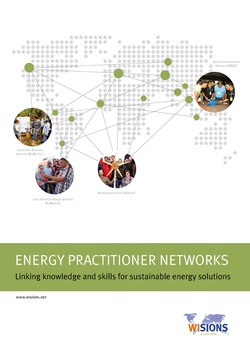
- Wuppertal Institut (2016). Energy practitioner networks. Linking knowledge and skills for sustainable energy solutions