Difference between revisions of "Fuel Prices Togo"
***** (***** | *****) |
***** (***** | *****) m |
||
| (One intermediate revision by one other user not shown) | |||
| Line 1: | Line 1: | ||
{{Fuel Price Factsheet | {{Fuel Price Factsheet | ||
|Fuel Price Country=Togo | |Fuel Price Country=Togo | ||
| − | |Fuel Pricing Policies=The | + | |Fuel Pricing Policies="Pricing policy: A 2002 decree established an automatic pricing mechanism, requiring adjustments when benchmark prices varied by ±5%. In the face of soaring world oil prices in 2007–08, government did not adjust prices in line with world prices, and a government audit found that the net shortfalls borne by oil companies had grown to 1.5% of GDP. When world prices fell in 2008 and 2009, government maintained price levels in the hope of making up for the accumulated shortfall. The principle of automatic price adjustments was reaffirmed in a decree issued in Nov 2010, but government did not start adjusting retail prices until Jun 2011 and fuel subsidies soared between Jan and May 2011. Taxes on petroleum products were waived in mid-2011. Prices have been frozen since, except for LPG." |
| − | + | (Source: Kojima, Masami. (2013, forthcoming). “Petroleum product pricing and complementary policies:Experience of 65 developing countries since 2009.” Washington DC: World Bank.) | |
|Fuel Currency=FCFA | |Fuel Currency=FCFA | ||
|Fuel Price Exchange Rate=472.9 | |Fuel Price Exchange Rate=472.9 | ||
| Line 13: | Line 13: | ||
|Fuel Transparency Pricing Mechanism=1 | |Fuel Transparency Pricing Mechanism=1 | ||
}} | }} | ||
| + | |||
| + | [[Category:Togo]] | ||
Latest revision as of 09:59, 7 October 2014
Part of: GIZ International Fuel Price database
Also see: Togo Energy Situation
Fuel Pricing Policies
| Local Currency: | FCFA |
| Exchange Rate: | 472.9
|
| Last Update: |
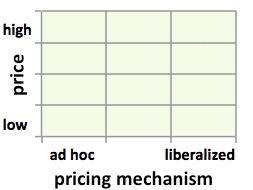
"Pricing policy: A 2002 decree established an automatic pricing mechanism, requiring adjustments when benchmark prices varied by ±5%. In the face of soaring world oil prices in 2007–08, government did not adjust prices in line with world prices, and a government audit found that the net shortfalls borne by oil companies had grown to 1.5% of GDP. When world prices fell in 2008 and 2009, government maintained price levels in the hope of making up for the accumulated shortfall. The principle of automatic price adjustments was reaffirmed in a decree issued in Nov 2010, but government did not start adjusting retail prices until Jun 2011 and fuel subsidies soared between Jan and May 2011. Taxes on petroleum products were waived in mid-2011. Prices have been frozen since, except for LPG."
(Source: Kojima, Masami. (2013, forthcoming). “Petroleum product pricing and complementary policies:Experience of 65 developing countries since 2009.” Washington DC: World Bank.)
Fuel Prices and Trends
| Gasoline 95 Octane | Diesel | |
|---|---|---|
| in USD* |
|
|
| in Local Currency |
|
|
* benchmark lines: green=US price; grey=price in Spain; red=price of Crude Oil
Fuel Price Composition
Price composition.
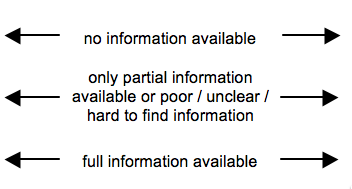
No information available.
At a Glance
| Regulation-Price-Matrix |
| ||||
  |

|
|
| ||
Sources to the Public
Contact
Please find more information on GIZ International Fuel Price Database and http://www.giz.de/fuelprices